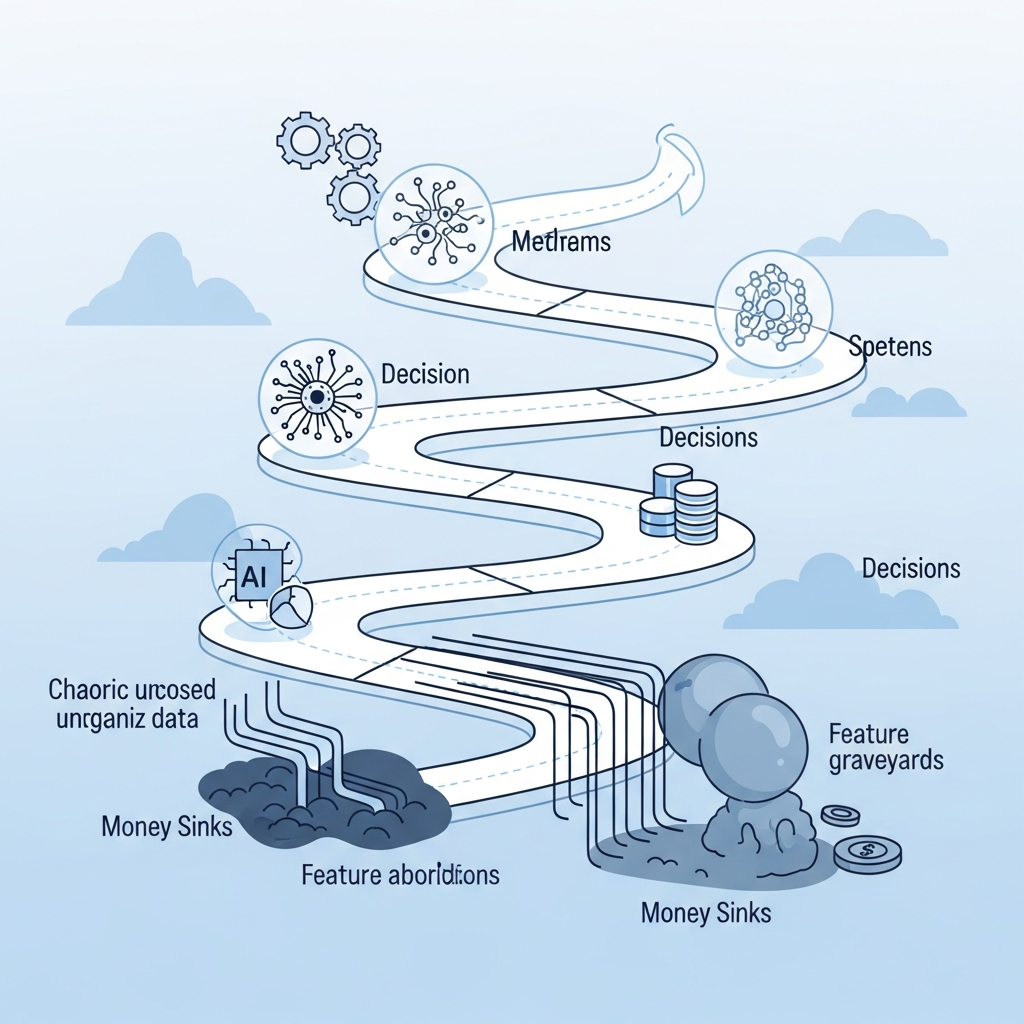



The AI Revolution: Accelerating Adoption and Impact
The pace of artificial intelligence (AI) adoption is nothing short of breathtaking, fundamentally reshaping how businesses operate, innovate, and compete. What was once a futuristic concept is now a core strategic imperative, driven by tangible returns and transformative capabilities.
Recent industry insights underscore this dramatic shift. In the 2023–2024 period alone, the use of generative AI (GenAI) solutions soared from 55% to a striking 75%. This isn’t just about buzz; companies investing in GenAI are reportedly achieving an impressive 3.7x return on investment for every dollar spent. This clear value proposition makes AI not just a technology to watch, but a critical tool for competitive advantage.
Why AI Adoption is a Business Imperative
The surge in AI adoption isn’t accidental. Businesses across the spectrum are recognizing AI’s power to:
- Boost Efficiency: Automating repetitive tasks, optimizing processes, and freeing human talent for higher-value work.
- Drive Innovation: Accelerating R&D, generating new product ideas, and enhancing service delivery.
- Enhance Customer Experience: Delivering hyper-personalized interactions, predictive support, and seamless user journeys.
- Improve Decision-Making: Providing data-driven insights, identifying trends, and forecasting outcomes with greater accuracy.
- Increase ROI: As evidenced by GenAI’s impressive returns, AI directly contributes to bottom-line growth.
Key AI Adoption Trends You Can’t Afford to Miss in 2025
As we look towards 2025, several critical trends will define the next phase of AI integration across industries.
1. Generative AI’s Maturation Beyond Content Creation
While GenAI has dazzled with its ability to create text, images, and code, its applications are rapidly expanding. Expect to see it deeply embedded in:
- Product Design & Engineering: Accelerating prototyping, simulating complex systems, and optimizing designs.
- Personalized Marketing & Sales: Crafting bespoke campaigns, generating tailored sales pitches, and personalizing customer interactions at scale.
- Code & Software Development: Assisting developers with intelligent code generation, debugging, and automated testing, significantly speeding up development cycles.
2. The Rise of Hyper-Automation
AI will increasingly converge with Robotic Process Automation (RPA), machine learning, and intelligent business process management to create hyper-automation systems. These systems can automate complex, end-to-end business processes, not just individual tasks. This will lead to:
- Streamlined workflows across departments (e.g., finance, HR, supply chain).
- Significant reductions in operational costs.
- Improved accuracy and compliance.
3. Focus on Responsible AI & Governance
As AI becomes more pervasive, the imperative for ethical considerations, transparency, and robust governance frameworks will intensify. Businesses will prioritize:
- Fairness & Bias Mitigation: Developing and deploying AI systems that are free from harmful biases.
- Data Privacy & Security: Implementing stringent measures to protect sensitive data used by AI.
- Explainability (XAI): Building AI models whose decisions can be understood and interpreted by humans.
- Regulatory Compliance: Navigating evolving AI regulations and standards globally.
4. AI-Powered Personalization at Scale
Consumers now expect highly personalized experiences. AI will enable businesses to deliver this at an unprecedented scale, moving beyond simple recommendations to:
- Dynamic content adaptation on websites and apps.
- Proactive customer service that anticipates needs.
- Customized learning paths and employee experiences.
5. Edge AI Expansion
Processing AI algorithms closer to the data source (at the ‘edge’ of the network) rather than in centralized cloud servers will become more common. This trend is crucial for:
- Real-time Decision Making: Essential for autonomous vehicles, smart factories, and critical infrastructure.
- Reduced Latency: Faster responses and improved performance for latency-sensitive applications.
- Enhanced Security & Privacy: Keeping sensitive data local.
Maximizing Your AI Investment
For businesses looking to capitalize on these trends, a strategic approach is essential:
- Develop a Clear AI Strategy: Align AI initiatives with overarching business goals.
- Invest in Talent & Training: Upskill your workforce to work alongside AI and understand its capabilities.
- Prioritize Data Quality: AI models are only as good as the data they’re trained on.
- Start Small, Scale Fast: Pilot projects can demonstrate value quickly, informing broader deployment.
- Embrace Ethical AI: Integrate responsible AI principles from design to deployment.
The Future is Intelligent
The rapid adoption and evolving capabilities of AI present an unparalleled opportunity for businesses to innovate, optimize, and differentiate. By understanding these key trends and strategically integrating AI into their operations, organizations can unlock significant ROI and secure a resilient, competitive future. The AI revolution isn’t coming; it’s already here, and those who embrace it will lead the way.