

The Alarming Reality: Why Most AI Projects Stall at PoC
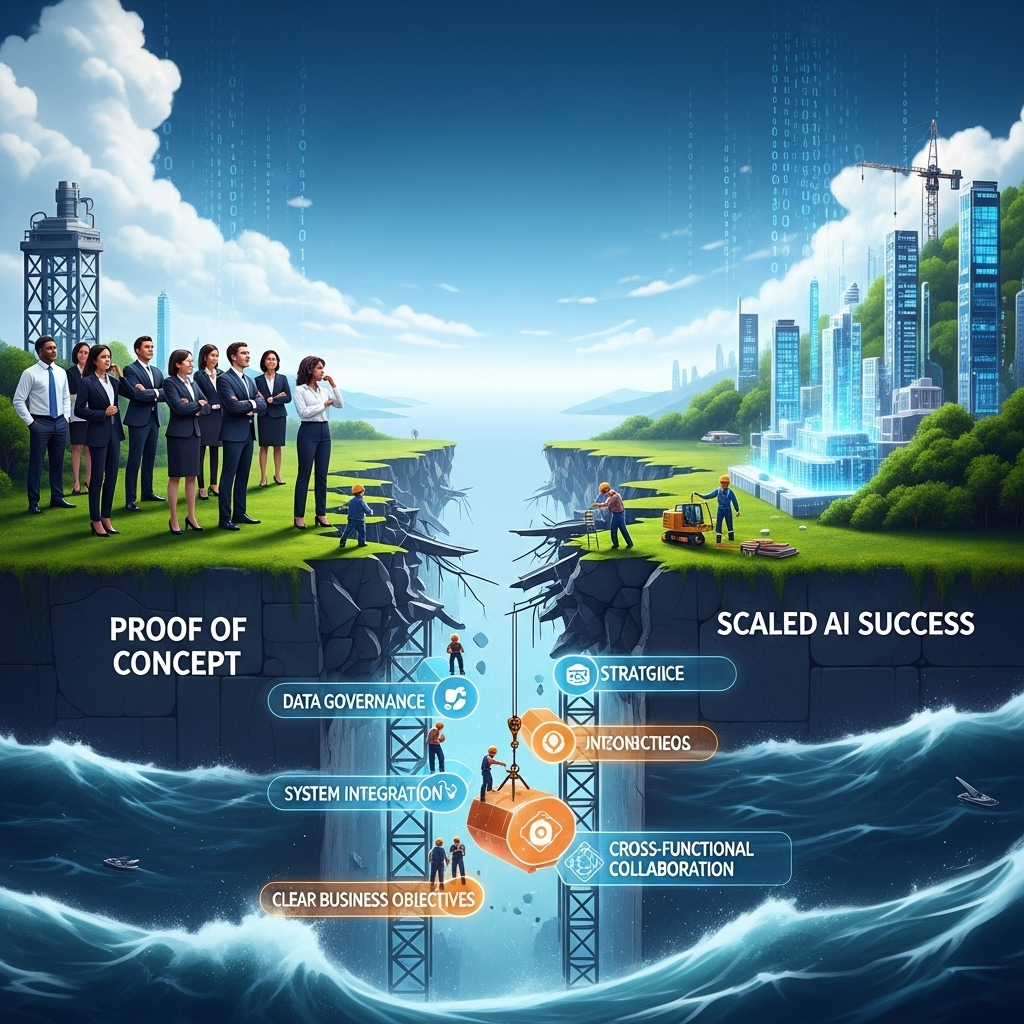
In the rapidly evolving landscape of artificial intelligence, many organizations are eager to harness its transformative power. However, the path from initial enthusiasm to scaled impact is often fraught with unseen challenges. Recent research in 2024 found that a staggering 74% of AI adoption projects fail to scale beyond the proof of concept (PoC) stage. This leaves tech leaders and innovators asking a crucial question: What are we missing in those critical first 90 days of implementation?
A successful PoC is a great start, demonstrating technical feasibility. But the journey from a promising demo to a fully integrated, value-generating AI solution in production requires more than just technical prowess. It demands strategic foresight, meticulous planning, and a deep understanding of potential pitfalls.
What Goes Wrong in the Critical First 90 Days?
The initial three months of an AI project are foundational. Mistakes made here can ripple through the entire lifecycle, ultimately hindering scalability and return on investment. Here are some common oversights:
Lack of Clear Business Alignment
Many teams fall into the trap of building AI for AI’s sake, rather than addressing a specific, measurable business problem. Without a clear objective tied to tangible business value, even a technically brilliant PoC struggles to justify further investment.
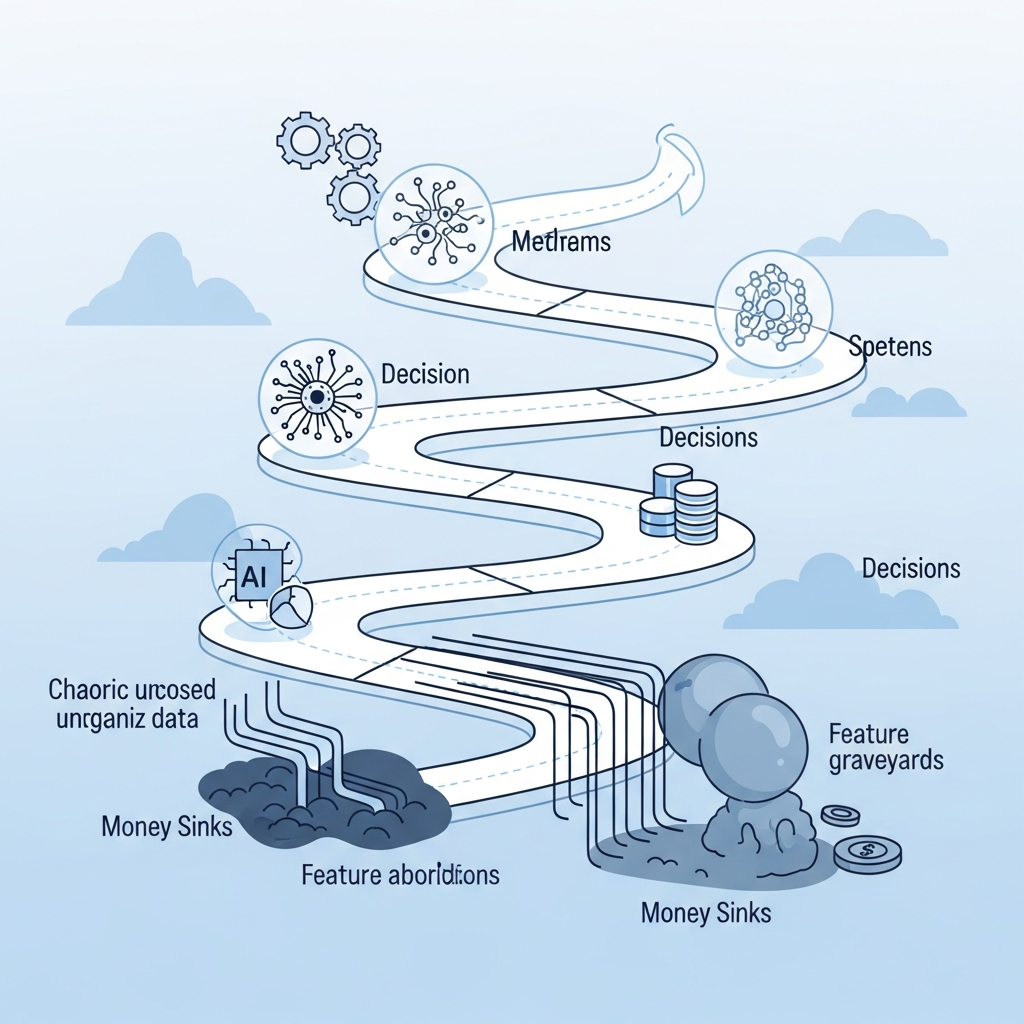
Underestimating Data Challenges
Data is the lifeblood of AI, yet its complexities are frequently underestimated. Issues like poor data quality, siloed data sources, insufficient governance, and a lack of scalable data pipelines can cripple a project before it leaves the sandbox.
Ignoring Integration Complexities
A PoC often operates in isolation. When it comes time to integrate with existing legacy systems, complex IT infrastructure, and various enterprise applications, many projects hit a wall. Planning for seamless integration must start on day one, not as an afterthought.
Neglecting Change Management & User Adoption
AI isn’t just a technological shift; it’s a human one. Failing to involve stakeholders, address user concerns, provide adequate training, and foster a culture of adoption means even the best AI solution might be rejected or underutilized by the very people it’s designed to help.
Absence of a Scalability Roadmap
If you don’t design for scale from the outset, your PoC will remain just that – a proof of concept. Thinking about infrastructure, MLOps, maintenance, and long-term performance beyond the initial experiment is crucial for future expansion.
Mastering Your First 90 Days: A Blueprint for Success
To avoid becoming another statistic, organizations must adopt a strategic, holistic approach during the initial phase of AI implementation. Here’s how to set your project up for scalable success:
Define Purpose, Not Just PoC
Before writing a single line of code, clearly articulate the business problem you’re solving and the measurable outcomes you expect. What specific KPIs will this AI impact? How will success be measured beyond technical viability?
Prioritize a Robust Data Strategy
Conduct a thorough data audit, establish clear data governance policies, and invest in scalable data pipelines. Ensure data quality, accessibility, and security are top priorities from day one.
Architect for Integration
Involve IT and architecture teams early to understand the existing ecosystem. Design your AI solution with integration in mind, ensuring it can seamlessly connect with your current systems and workflows.
Engage Stakeholders Early & Often
Identify key stakeholders, from end-users to leadership, and involve them throughout the process. Communicate transparently, manage expectations, and build internal champions to drive adoption and ensure alignment.
Build with Scalability in Mind
Even for a PoC, consider the infrastructure, development practices (e.g., modular design), and operational capabilities needed for a production-ready system. Think about how this solution will handle increased data volumes, user loads, and feature expansion.
Foster Cross-Functional Collaboration
Break down silos. Bring together data scientists, engineers, business analysts, domain experts, and even legal/compliance teams. A multidisciplinary approach ensures all aspects of the project are considered.
Beyond the First 90 Days: Sustaining Momentum
Once you’ve successfully navigated the initial 90 days with a clear strategy, robust data, and an integration-ready design, the journey continues. Sustained success requires continuous monitoring, iterative development, and a commitment to measuring and communicating ongoing business value. Regular reviews, performance tuning, and user feedback loops will ensure your AI solutions continue to deliver impact.
Unlock the Full Potential of AI
The promise of AI is immense, but its realization hinges on disciplined execution from the very beginning. By strategically addressing these critical areas in the first 90 days, tech leaders can transform a promising proof of concept into a truly scalable, impactful AI solution, driving innovation and delivering significant business value. Don’t just build AI; build AI that scales.